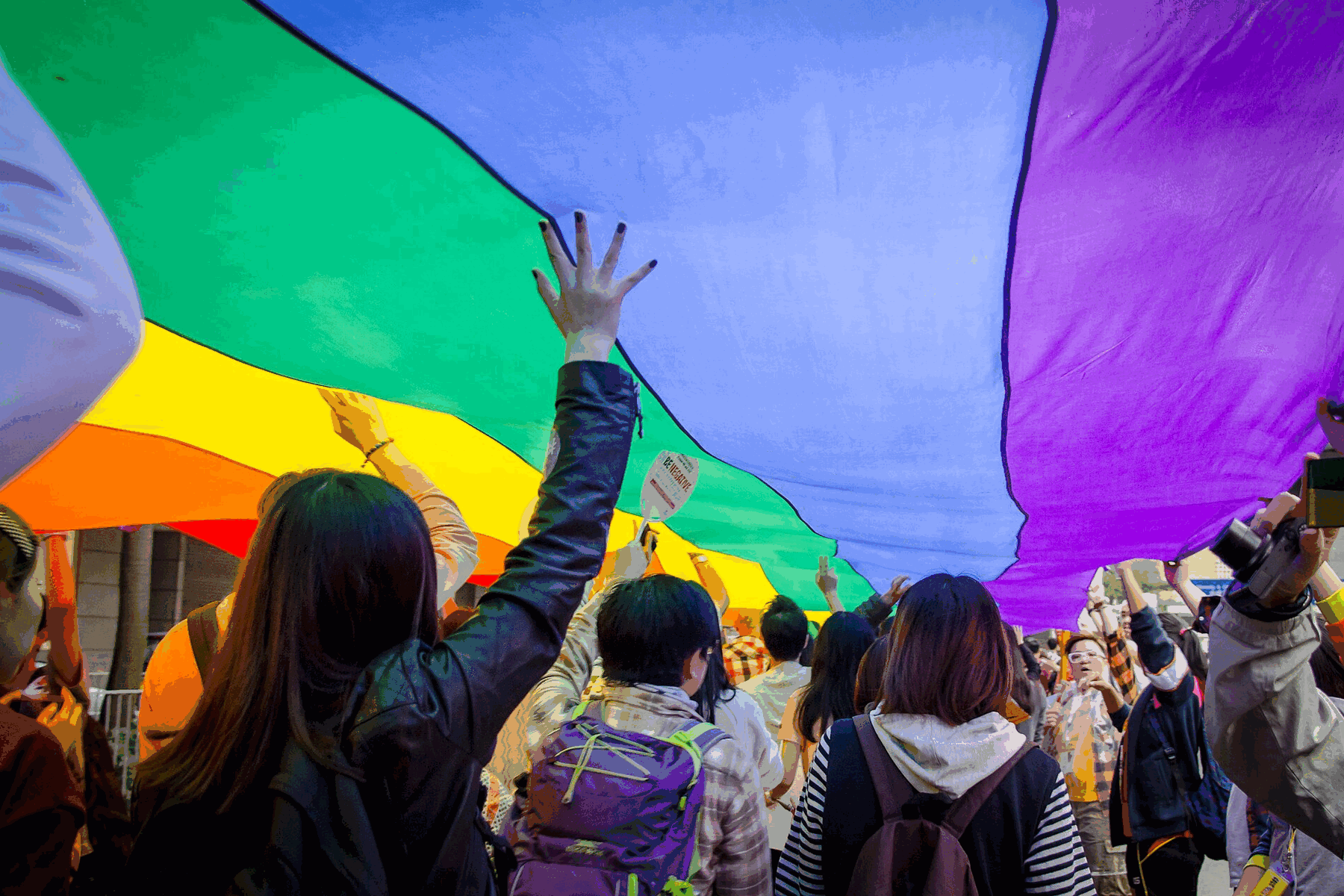
Hong Kong Pride Parade, 2014. Photo: doctorho / Flickr, CC BY 2.0
Hong Kong's Vanishing Rainbow Shows How China's Social Control Travels
- Published in
- The Diplomat
- Date
- 22 October 2026
From Hong Kong to Bangkok, Paris, Taiwan and North America, LGBTQ communities are encountering censorship, surveillance and coercive pressure linked to China — a sign that Beijing's social control is extending beyond conventional political dissent, and beyond China's borders.
This commentary, published in The Diplomat's China Power section, takes Hong Kong's vanishing rainbow as a revealing entry point into a wider pattern.
Hong Kong's narrowing space. In October the organisers of Hong Kong Pride cancelled their annual Rainbow Market at Central Market over an "administrative error," after a venue had been confirmed, a deposit paid, and the event announced. Earlier in 2026 Pink Dot HK fell through for a second straight year as venues were withdrawn, and the city's last full Pride march was in 2018. Consensual same-sex conduct is legal and social acceptance is high — yet organising publicly, holding venues and staying visible in civic life has become steadily harder. The space is narrowing through administrative and institutional means rather than criminal prohibition.
A pattern that travels. The same contraction is visible on the mainland (Shanghai Pride ended in 2020; the Beijing LGBT Center closed in 2023), where independent groups with international ties are treated as possible channels of foreign influence. More striking is how the control now crosses borders: Chinese nationals reportedly drew police attention at home after attending Bangkok Pride; overseas groups' WeChat content remains subject to filtering; a Paris cultural space lost its Xiaohongshu account over a transgender-film screening; and mainland writers who published on Taiwan's Haitang platform were summoned and prosecuted under obscenity laws. Control travels through people, platforms and Chinese-language communities, well outside China's territory.
Why it matters to Beijing. LGBTQ life sits at the intersection of several Xi-era concerns — autonomous organisation outside Party-supervised structures, the pluralist principle that individuals keep dignity and rights even when they depart from majority norms, and an official turn toward marriage, reproduction and "civilizational" family values amid demographic decline. Repression, the commentary argues, can close centres, block events and delete accounts, but it cannot remove the identities and experiences that produced these communities — risking a durable alienation, felt through everyday life, that nationalist or civilizational rhetoric cannot easily displace.