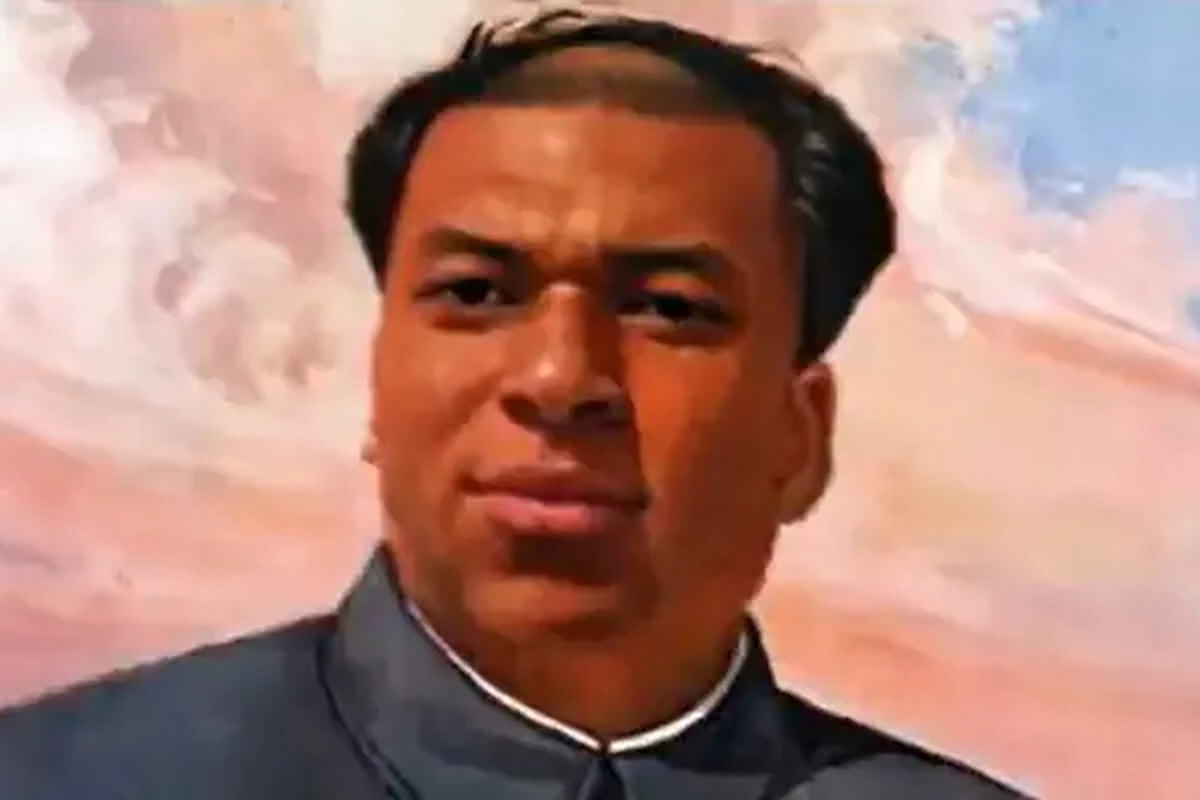
The internet meme at the centre of the controversy.
The Lasting Price of Mbappé's Apology to China
- Published in
- The Diplomat
- Date
- 30 October 2026
The commercial fallout for Real Madrid may be temporary, but the precedent for censoring speech beyond China's borders is far more consequential.
This commentary, published in The Diplomat's China Power section, reads the Mbappé episode as a demonstration of how China's economic influence carries political censorship across national borders.
What happened. In a casual interview, French football star Kylian Mbappé described a meme splicing his face onto Mao Zedong's body as showing a "Chinese dictator" — a joke aimed at himself. Within days, three Chinese sponsors had terminated their partnerships, broadcasters had suspended football coverage, and Mbappé, La Liga and Real Madrid had all issued apologies.
Censorship without an order. There is no public evidence that authorities instructed any company to act. In China's commercial environment, the commentary argues, businesses anticipate official sensitivities and compete to demonstrate loyalty; once one firm takes a position, restraint becomes a reputational liability. This decentralised "competitive political loyalty" means the state need not supervise each act of censorship. The Foreign Ministry then elevated a footballer's quip into a matter of national dignity — even as the Party itself has repeatedly reinterpreted Mao's legacy, its 1981 and 2021 historical resolutions both assigning him responsibility for the Cultural Revolution. The question becomes not only how that history is interpreted, but who is permitted to interpret it.
Why the precedent outlasts the fallout. Commercial penalties in China's political disputes often prove reversible — CCTV resumed NBA coverage in 2020; Beijing later lifted tariffs on Australian wine and barley without any apology. The effect on expression is different. The apologies are already public, and other athletes, entertainers and institutions may quietly begin avoiding historical or political references for fear of unpredictable commercial cost. That anticipatory self-censorship needs no further intervention and is almost impossible to measure. The standard for what counts as "acceptable" stays in Beijing's hands, and compliance offers no guarantee against future punishment. The commercial damage may be reversible; the consequences for free expression are immediate, dispersed, and far harder to undo.