Memory on Trial — 37th Anniversary Tiananmen Exhibition, Tokyo
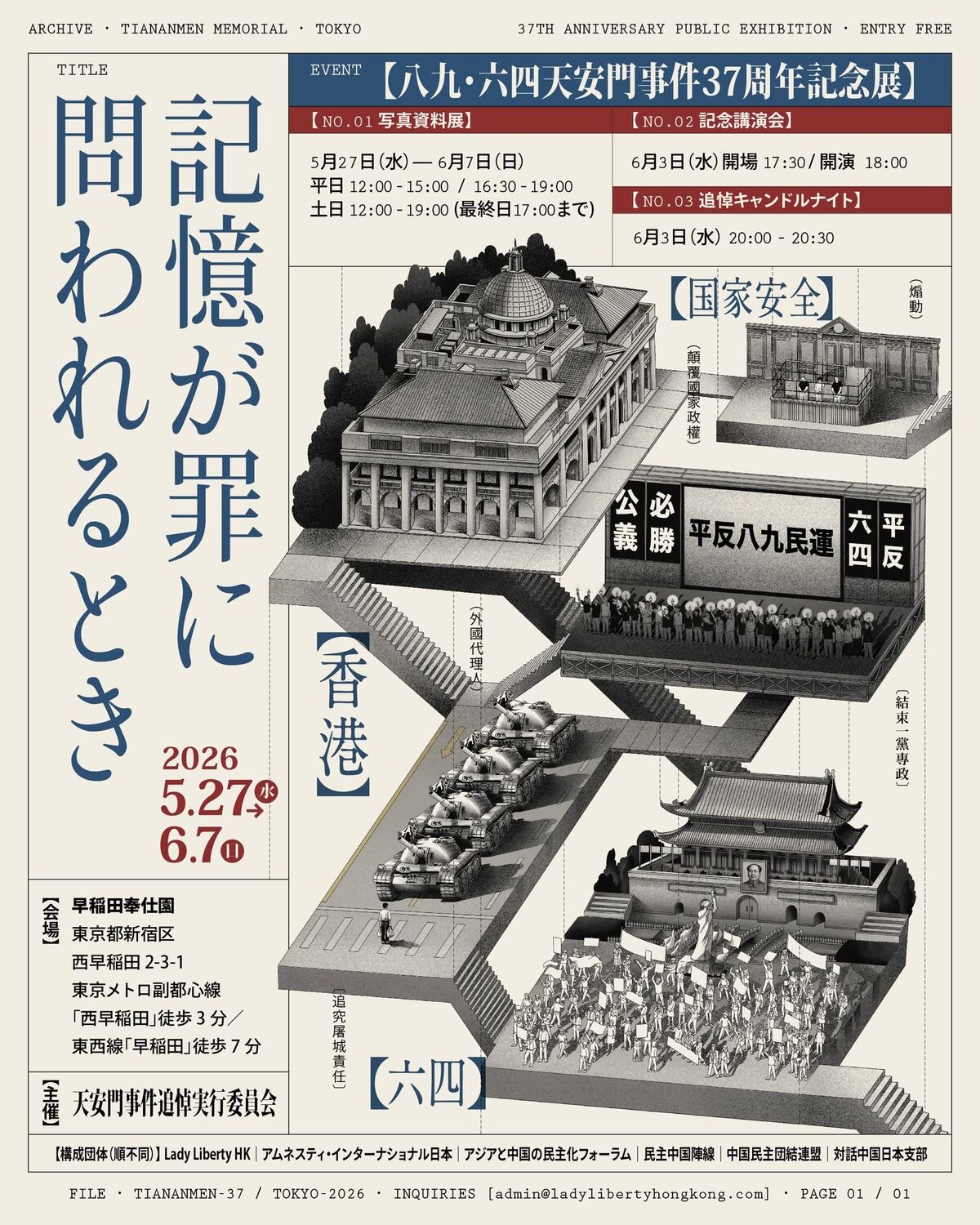
- Project
- EXH-029
- Location
- Scott Hall Gallery, Waseda Hoshi-en, Nishi-Waseda, Tokyo, Japan
- Date
- 27 May – 7 June 2026
- Press
- NHK NEWS WEB — 中国 天安門事件からきょうで37年 事件知らない若い世代もNHK NEWS WEB — 中国 天安門事件から37年 北京では追悼の動きなど警戒日本テレビ NEWS NNN — 天安門事件からきょうで37年 当時の学生リーダーが会見テレビ東京 WBS(ワールドビジネスサテライト)— 当日特集FNNプライムオンライン — 「天安門事件」から37年 民主化運動の学生らを軍が武力鎮圧日本経済新聞 — 香港「一国二制度」どうなった?崩れた国際的な約束事産経新聞 — 天安門事件6月4日で37年、元学生指導者が会見読売新聞 — 6月4日付・社会面毎日新聞 — 中国当局、天安門事件遺族の墓参りを初禁止か共同通信 — 天安門事件の墓参り禁止 中国当局、遺族抗議共同通信 — 天安門事件37年、追悼抑圧 中国、「負の記憶」消去Nikkei Asia — Activists struggle to keep spotlight on Tiananmen in world beset by crisesThe Epoch Times — Tiananmen Massacre Memorials Span Globe as Remembrance Is Suppressed in China, Hong KongUPI — Wu'er Kaixi warns South Koreans on North KoreaAP — A Hong Kong artist tries to mark the Tiananmen crackdown. Police quickly stopped himReporters Without Borders (RSF) — Wu'er Kaixi speaks up for journalists on the Tiananmen anniversaryCentral Tibetan Administration — Representative Dr. Tsewang Gyalpo Arya Attends 37th Anniversary of the Tiananmen Square Massacre in Tokyo
- Partners
- Amnesty International Japan, Asian Democracy Forum, Democratic China Front, Chinese Democratic Alliance, Dialogue with China (Japan)
For thirty years, Hong Kong's Victoria Park held open the space that nowhere else in China could — a public candlelight vigil on June 4, attended by as many as 180,000 people, organized by the Hong Kong Alliance in Support of Patriotic Democratic Movements of China. In 2020, the National Security Law changed that. By 2021, the Alliance's leaders were arrested. By 2024, Article 23 was enacted. The vocabulary that had sustained thirty years of public commemoration — mourning, candlelight, hunger strike, vindication — was reframed in court as evidence of sedition.
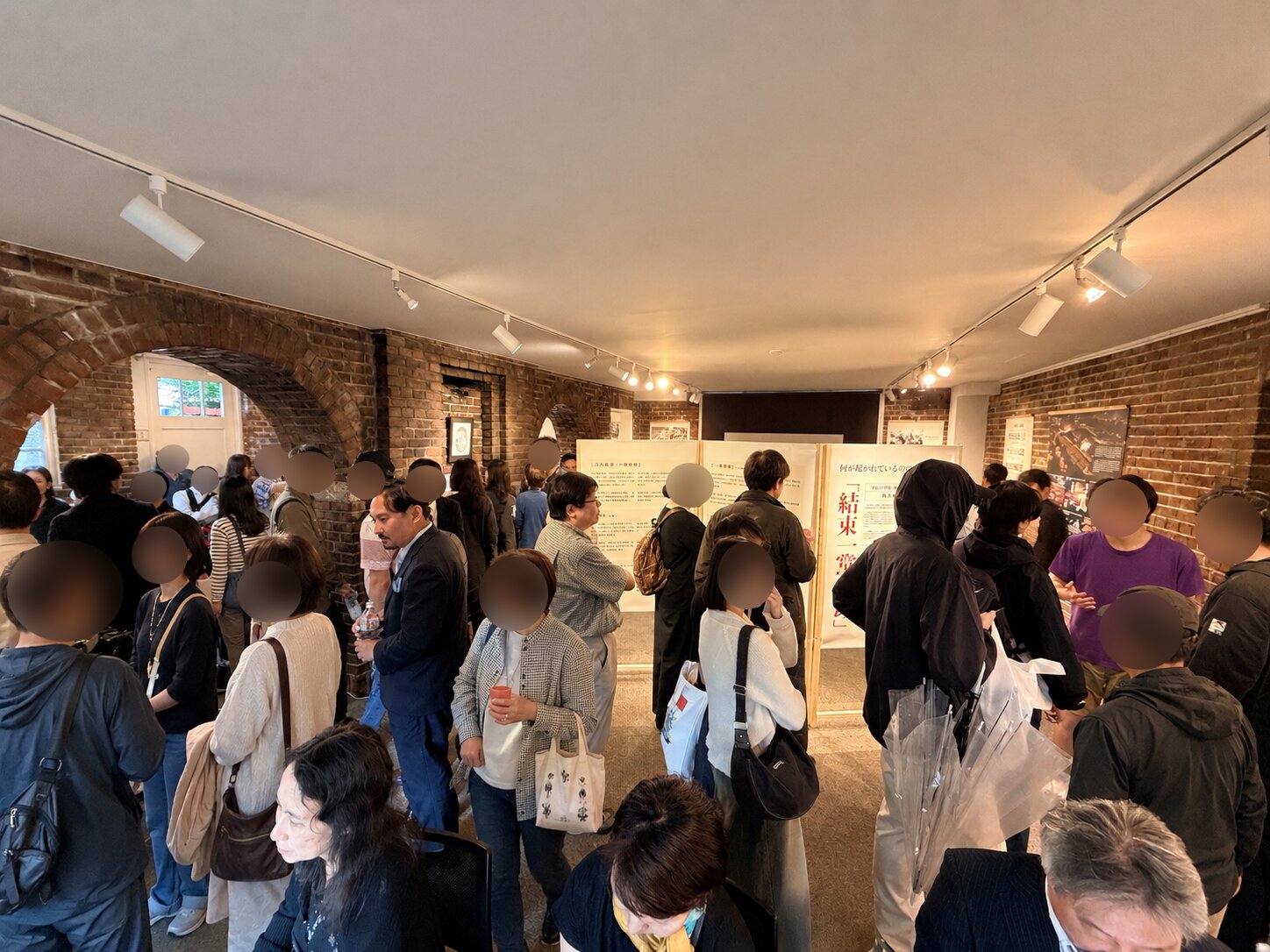
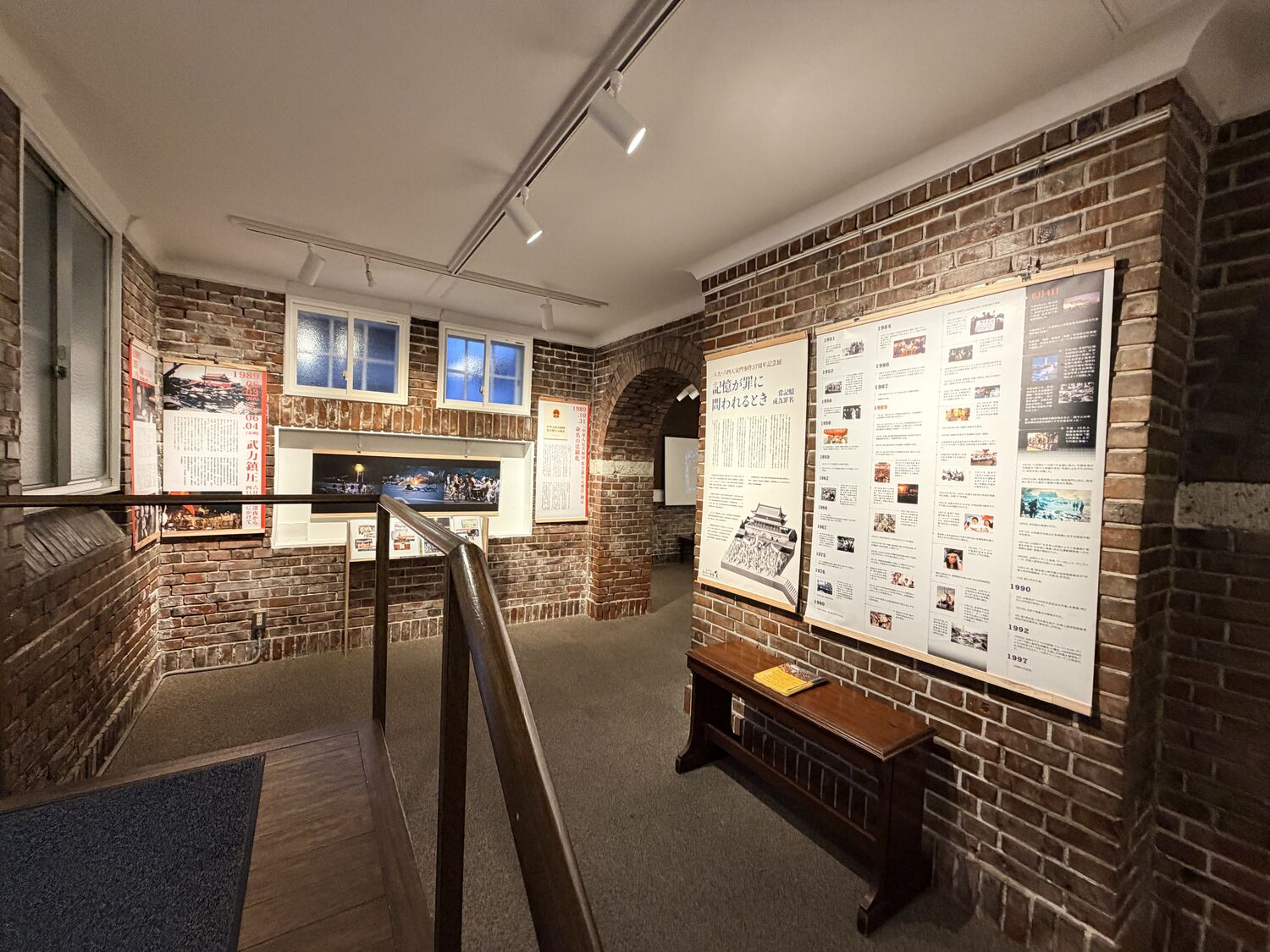
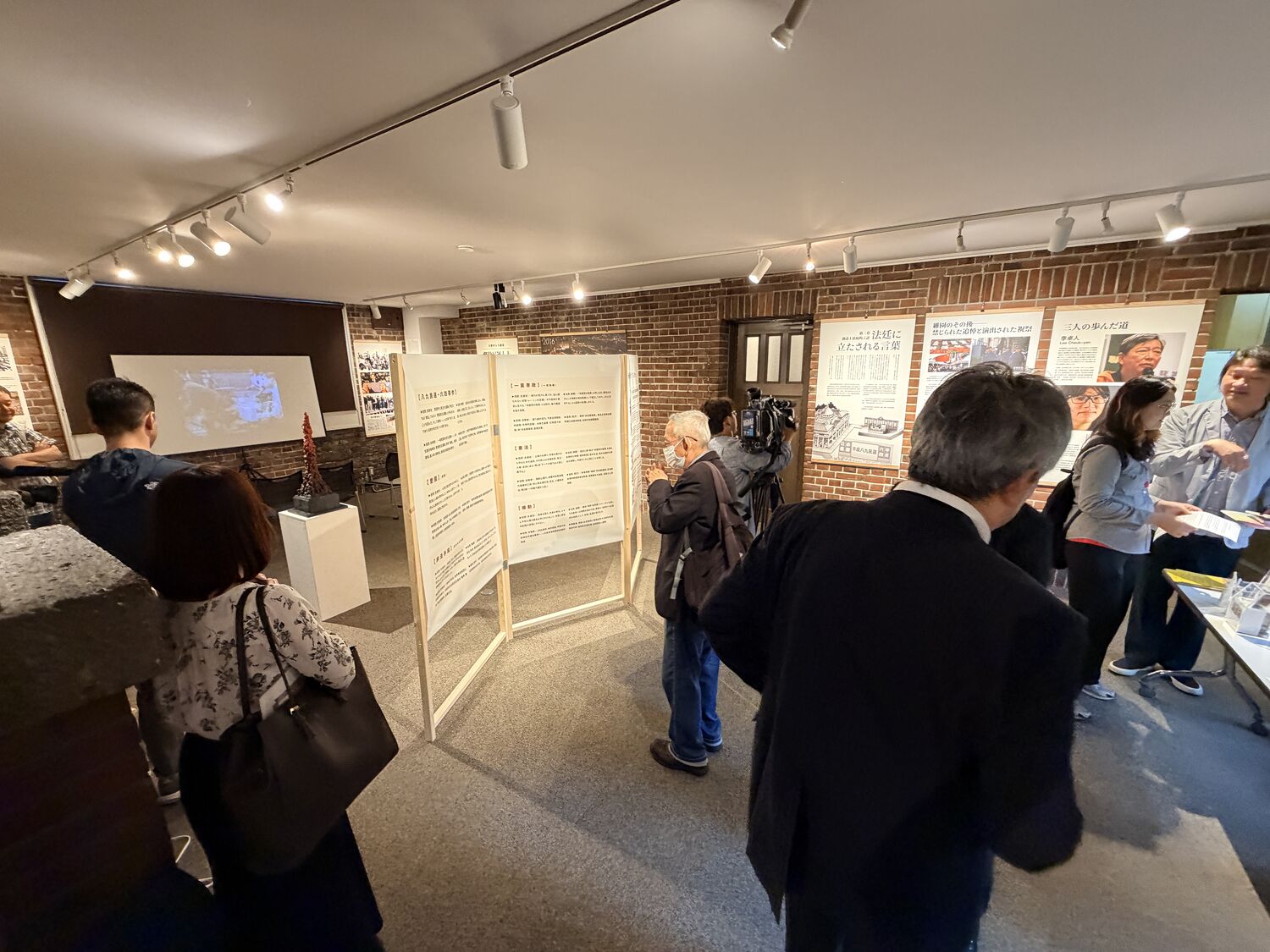
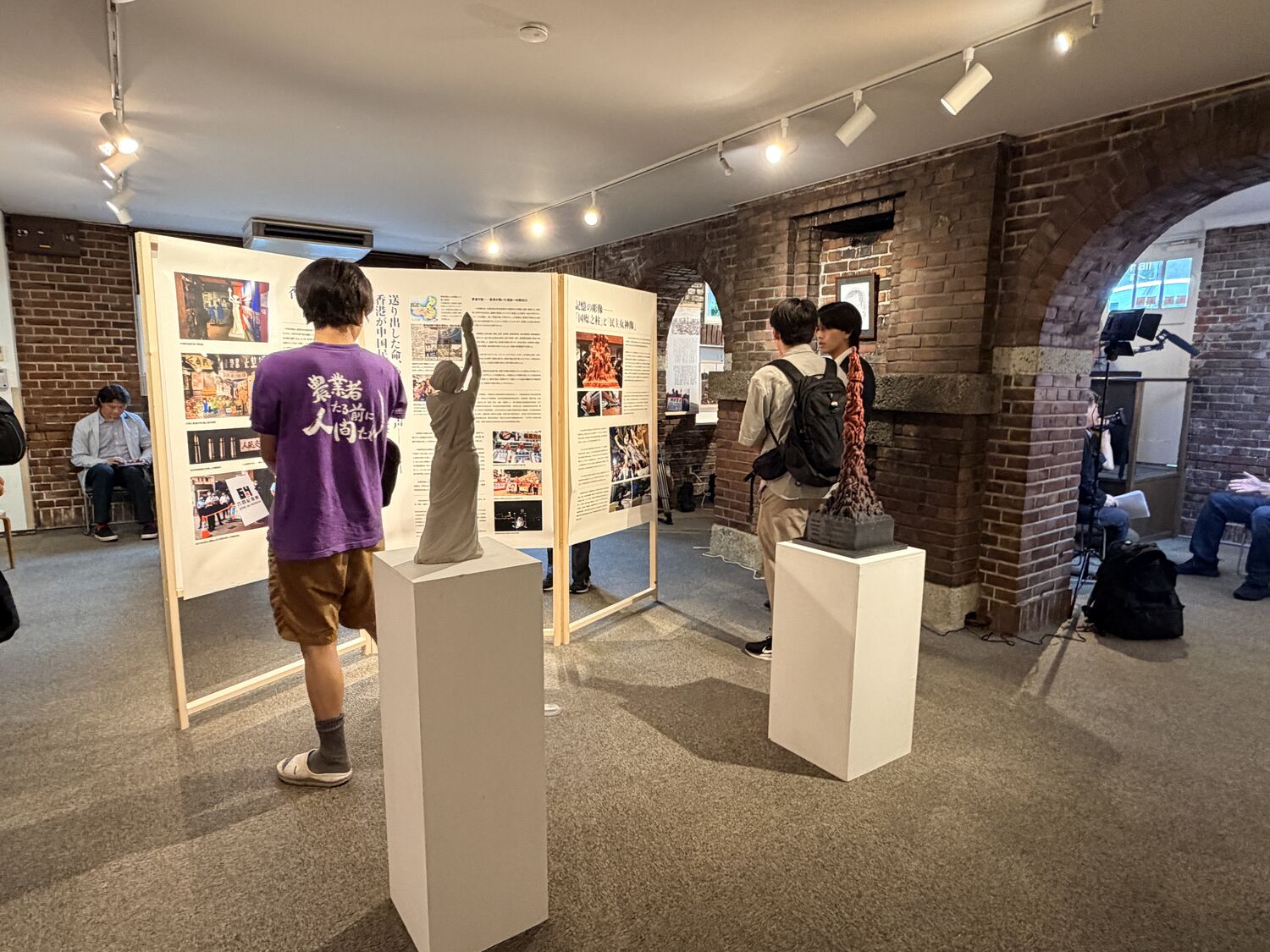
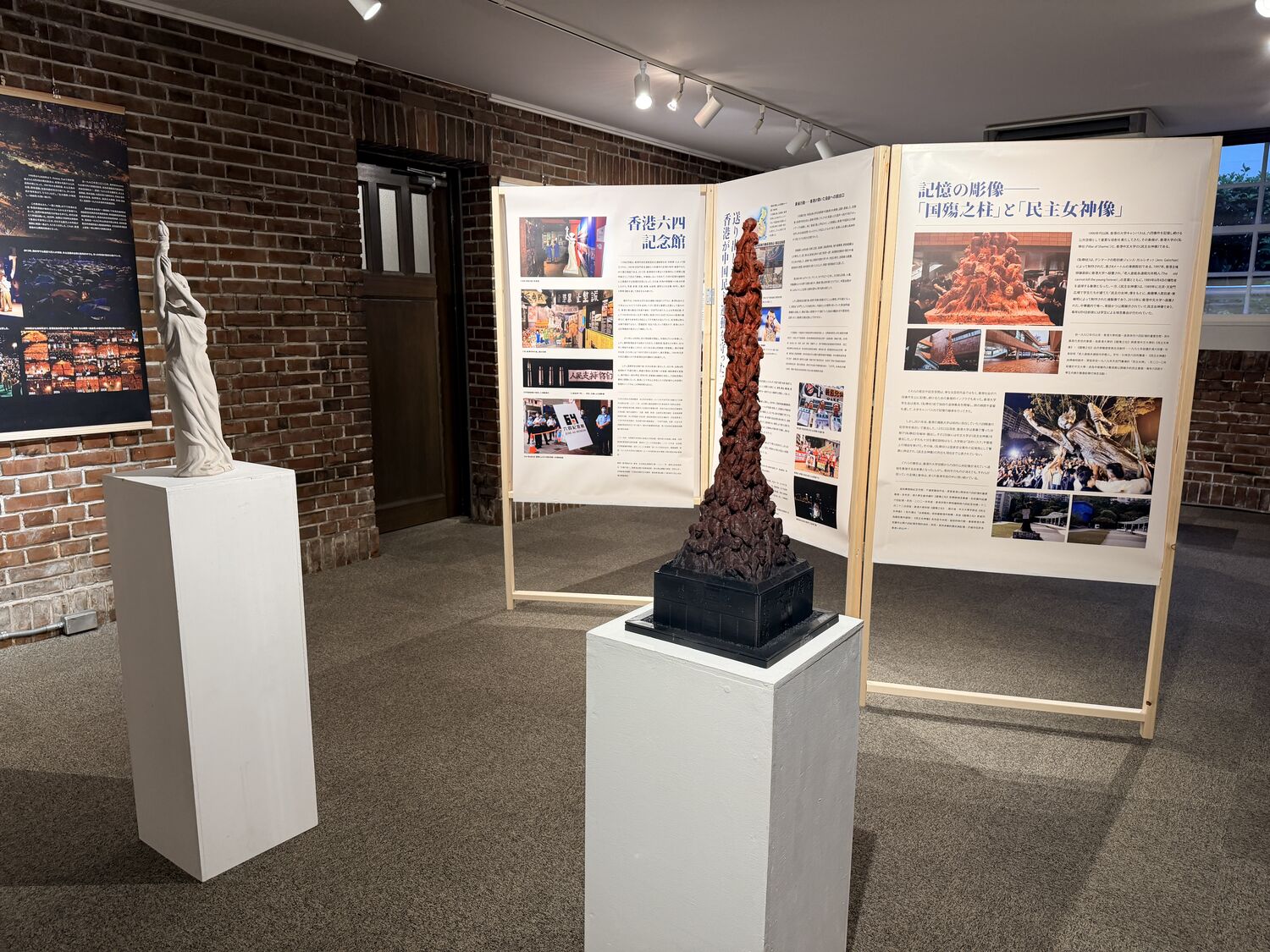
From 27 May to 7 June 2026, Lady Liberty Hong Kong and five partner organizations mounted an exhibition at Scott Hall Gallery, Waseda Hoshi-en, asking what it means when memory itself is put on trial.
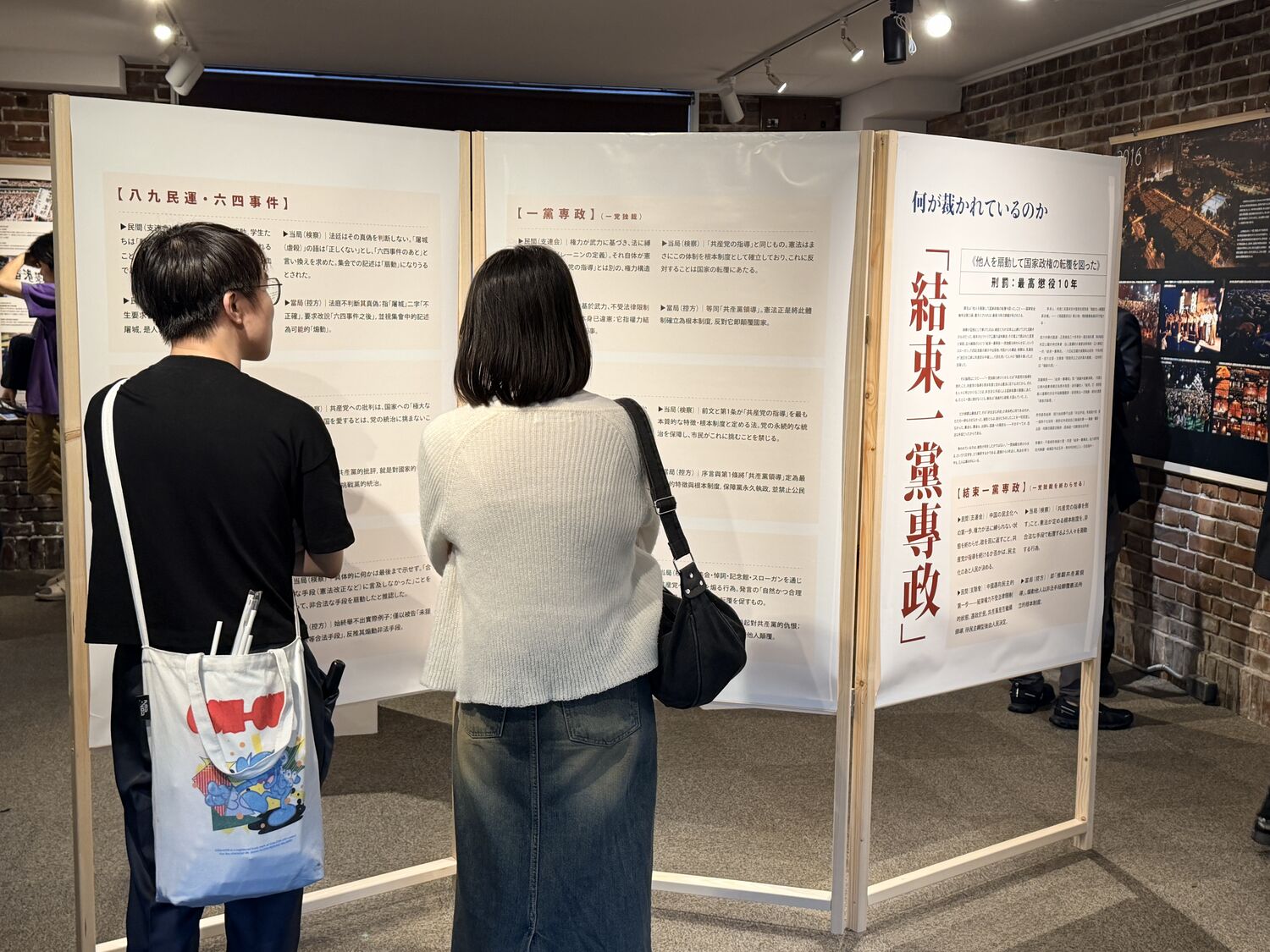
The full Japanese title — 八九・六四天安門事件37周年記念展《香港・六四・国家安全――記憶が罪に問われるとき》 — situates three terms as the exhibition's governing problem: Hong Kong, June 4, and national security. The subtitle translates literally as When Memory Is Put on Trial.
The exhibition was structured in four chapters, tracing a progression from event to suppression to the visitor's own present.
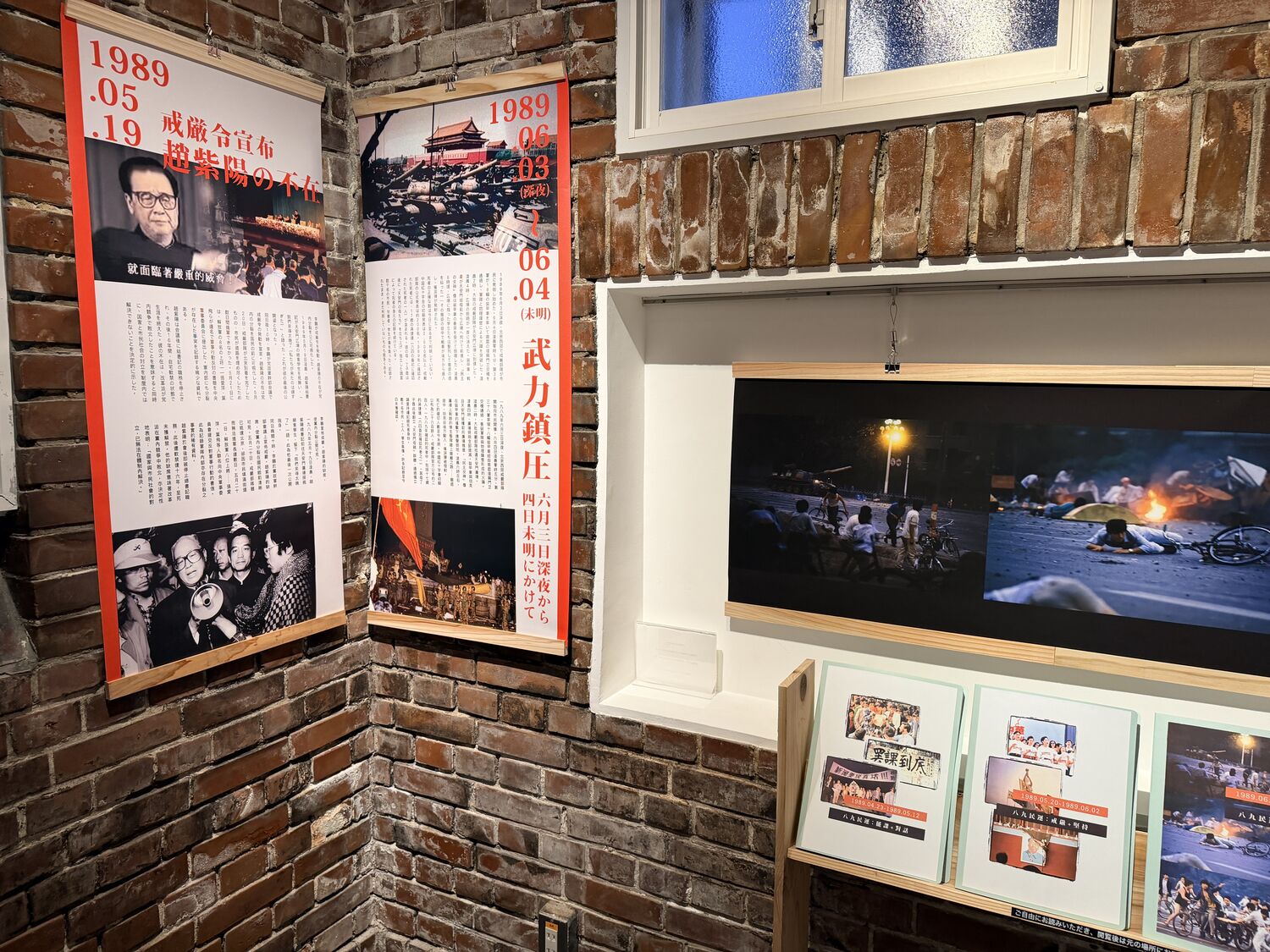
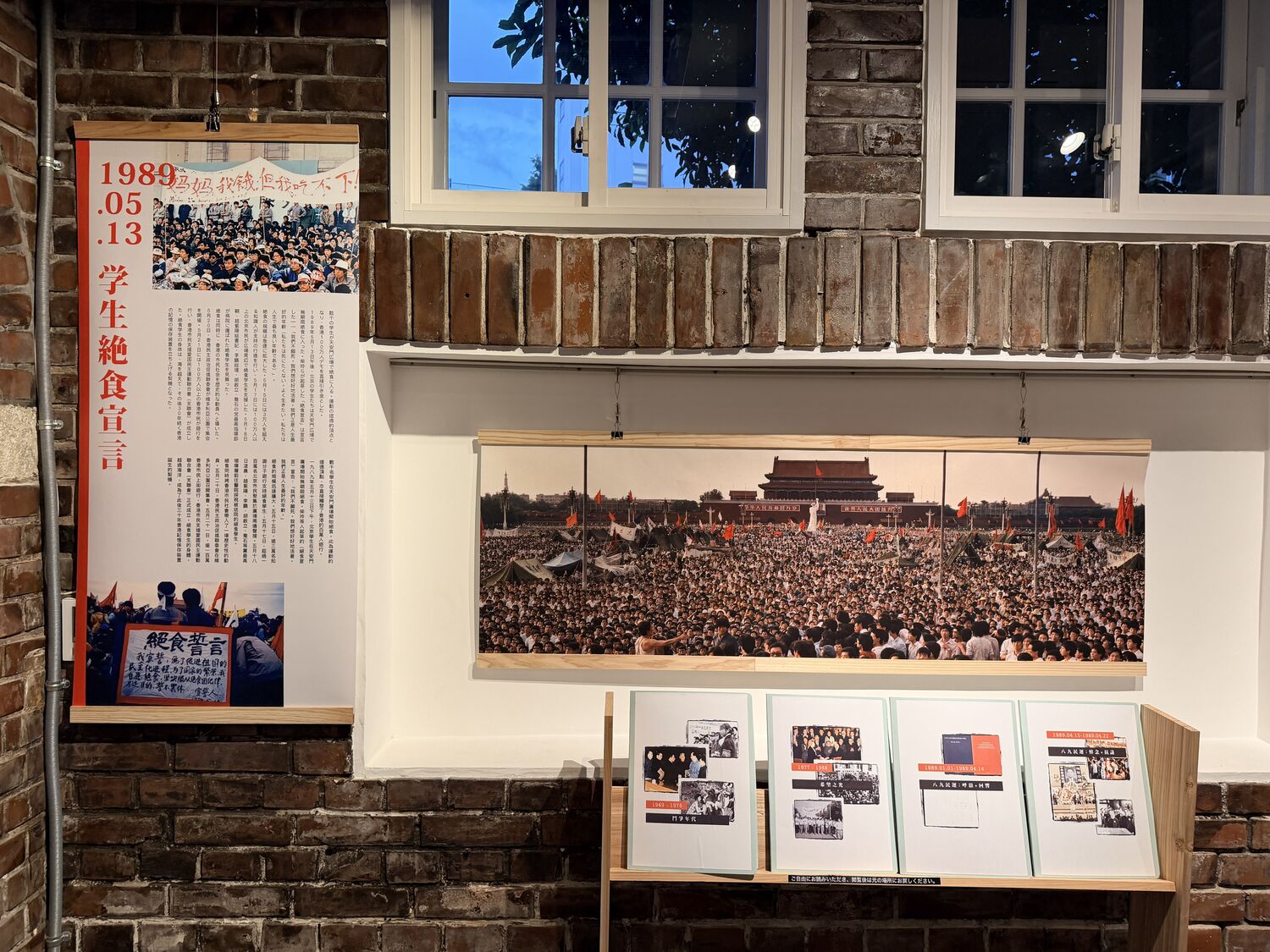
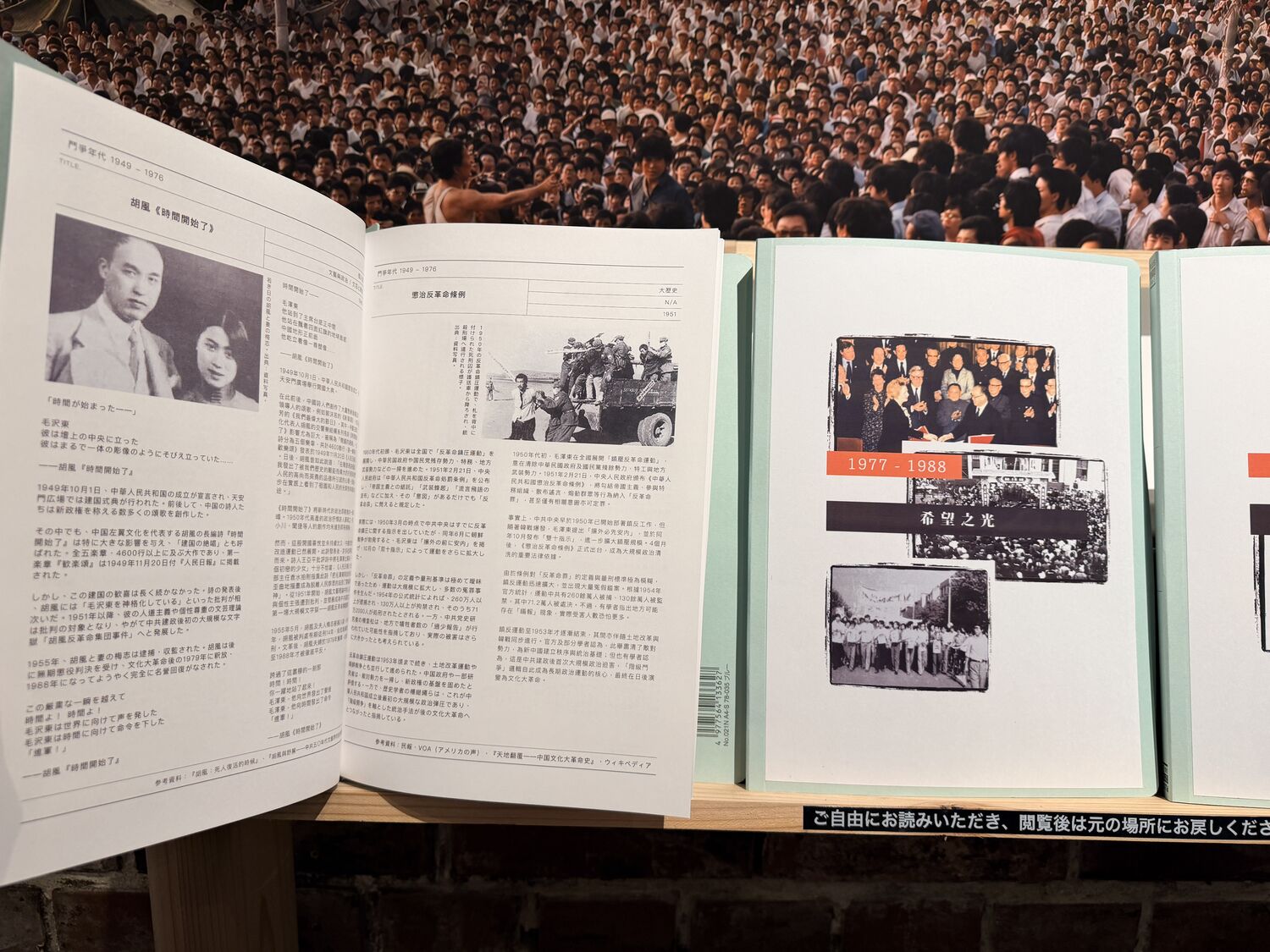
Chapter 1 — 1989: The Event and Its Naming opened with the 1989 movement itself, framed not merely as historical record but as a contest over language. "Riot," "counter-revolutionary rebellion," "patriotic democratic movement," "the June 4 incident," "8964" — who named what, and how, has shaped every subsequent account. Memory begins with naming, and naming is always contested.
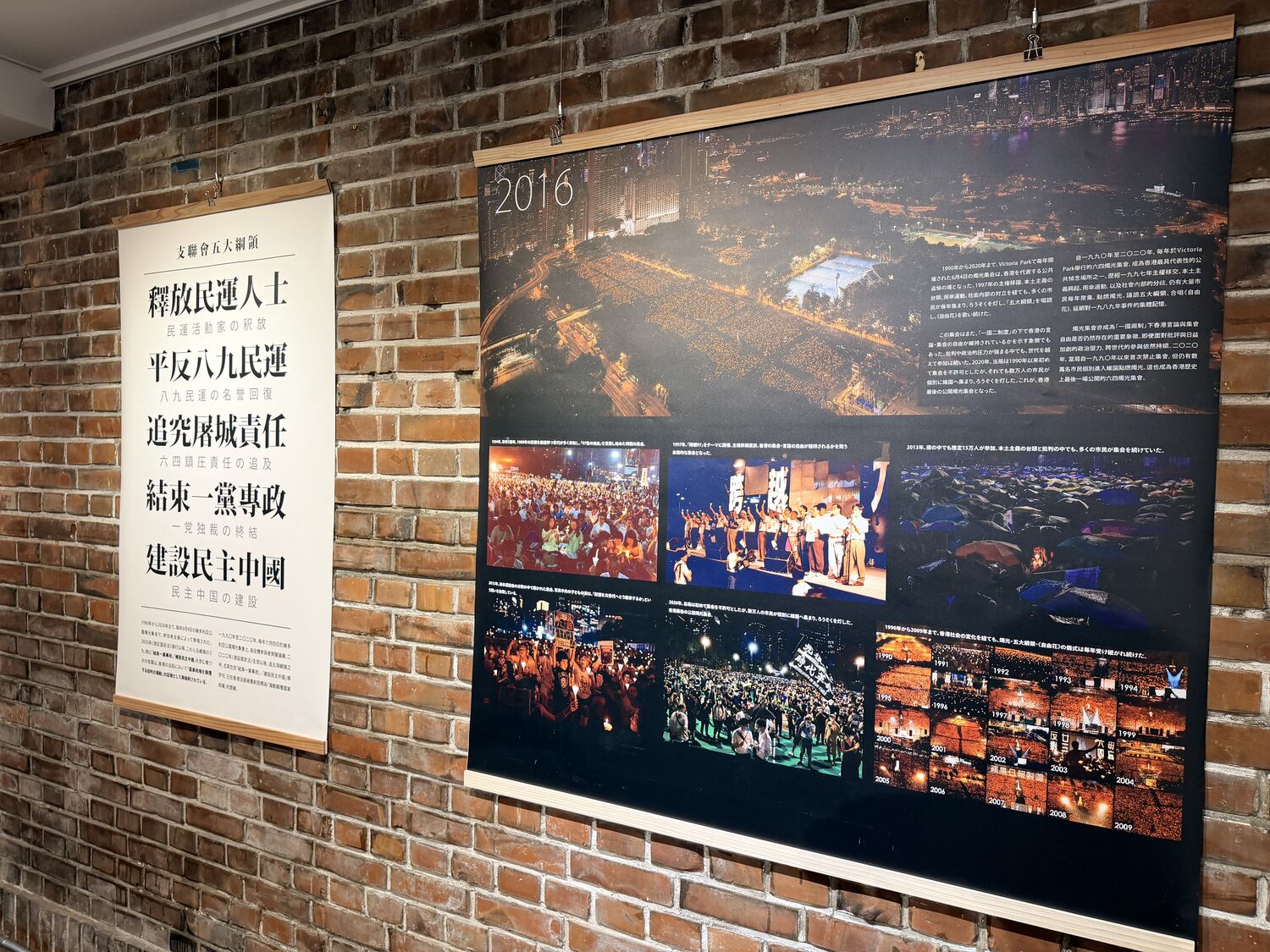
Chapter 2 — Hong Kong: The Last Public Space traced the thirty-year arc of Victoria Park's June 4 vigils — the only annual public commemoration of the Tiananmen Massacre ever held under Chinese sovereignty. From 1990 to 2019, that vigil accumulated a public record: photographs, testimonies, ritual, and an institutional infrastructure built by the Alliance. Chapter 2 presented that record as a form of civic practice — one that has now been dismantled.
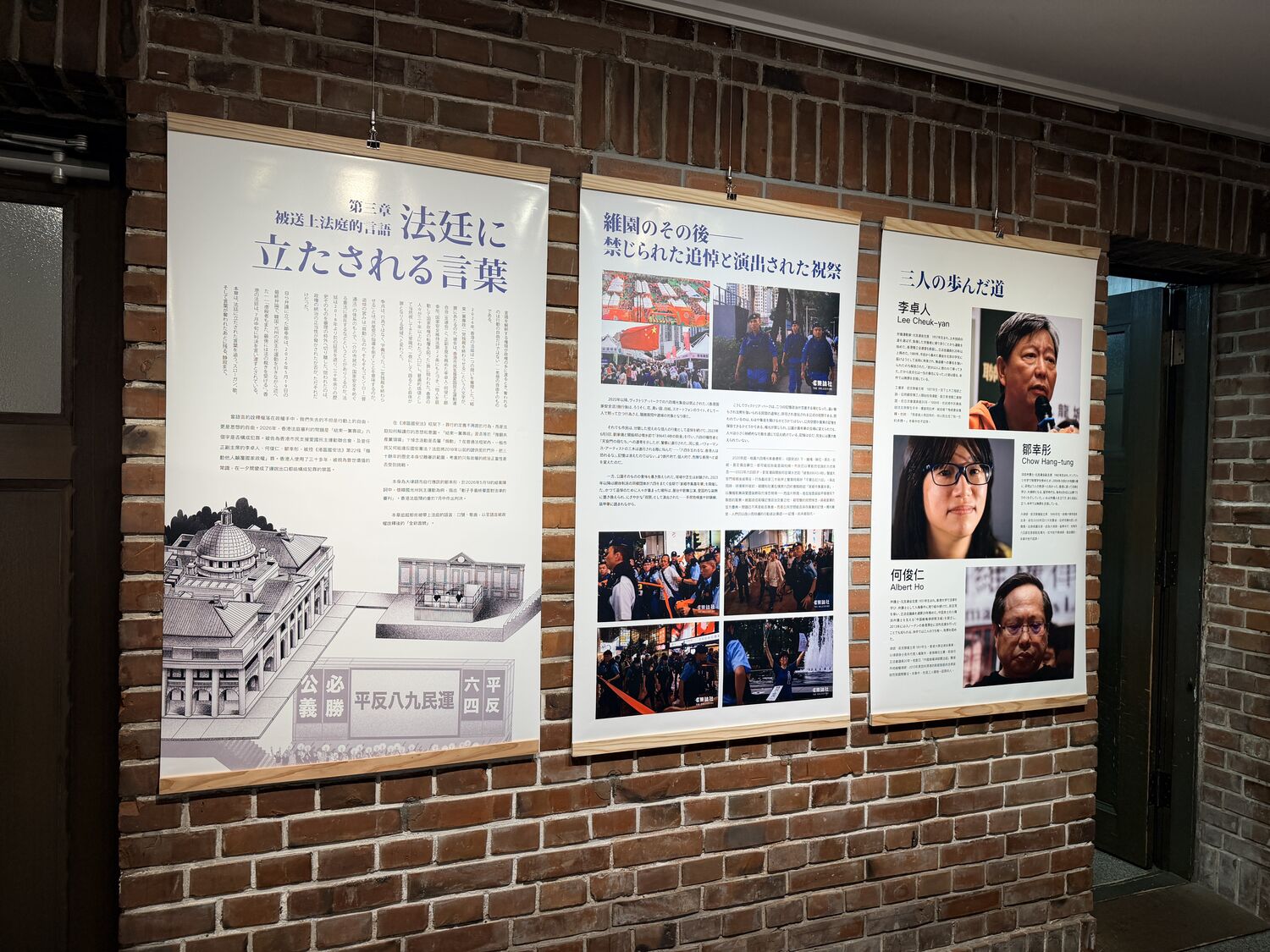
Chapter 3 — Words in the Dock examined what has happened since: how words long used in commemoration were reinterpreted in court as tools of sedition. The chapter took the form of a lexicon — each entry showing a term's meaning within civil society, and its reinterpretation under prosecution. The ongoing trial of Alliance leaders Lee Cheuk-yan, Ho Chun-yan, and Chow Hang-tung served as the central case: three people charged with "incitement to subvert state power" for organizing acts of public remembrance. Their final submissions were among the documents displayed.
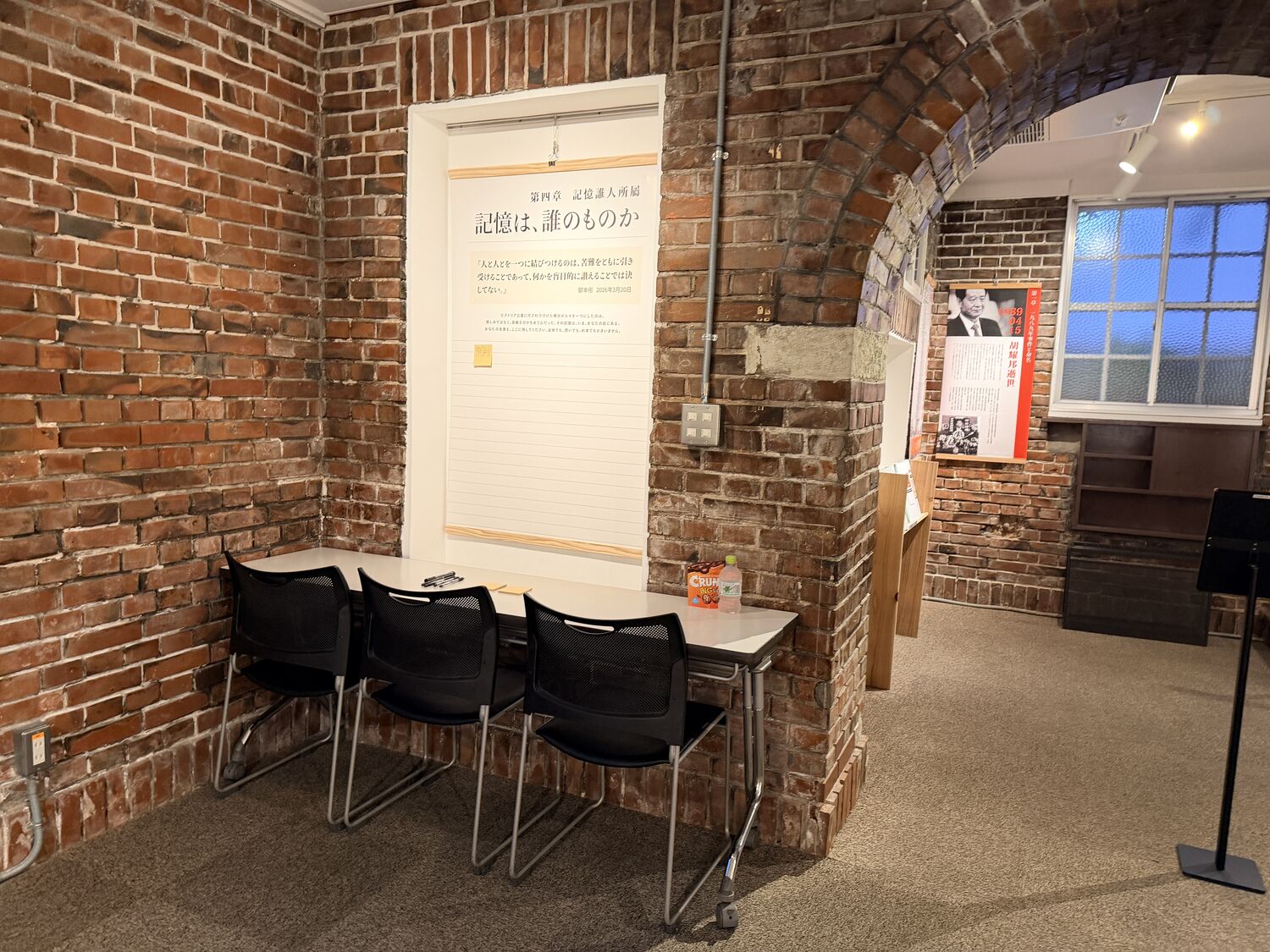
Chapter 4 — Whose Memory? provided the space for visitors to answer that question themselves. A "Memory Wall" — a large open noticeboard in the gallery — invited written responses in any language. Over 12 days, 128 messages accumulated, written in 8 languages: Traditional Chinese, Simplified Chinese, Japanese, English, Korean, Russian, Mongolian, and mixed scripts. Traditional and Simplified Chinese coexisted on the same wall without being collapsed into a single category — a condition almost unrealizable in any public space currently under Chinese or Hong Kong jurisdiction. The messages spanned political positions that did not agree with each other: Hong Kong localism, pan-Chinese democratism, Taiwanese democratic tradition, humanist witness, and critical self-reflection. They arrived from voices beyond the expected audience: a visitor from Guangzhou, a Mongolian-language inscription, a message in Russian calling for the fall of both Xi Jinping and Putin.
The exhibition ran for 12 days, received 550 visitors in total, and was covered by 22 media outlets — including all five major Japanese national dailies (Asahi, Yomiuri, Mainichi, Nikkei, Sankei), NHK, all four commercial broadcast networks, Kyodo News, and major international English-language outlets. The Asahi Shimbun's print edition of 4 June 2026 (morning edition, page 9, International section) ran a sidebar noting the Tokyo vigil alongside its primary coverage, with a photograph of the candlelight gathering.
On 3 June, the exhibition's twelfth day, over 250 people gathered at Scott Hall for a commemoration lecture and candlelight vigil — the 37th anniversary of the Tiananmen Massacre. A statement from Chow Hang-tung, written from Tai Lam Correctional Institution, was distributed and read aloud. She began a 37-hour hunger strike that same night.
The full record of the exhibition — including all 128 messages from the Memory Wall, transcribed, translated, and catalogued — is archived at the LLHK Japan website.